Ontario aesthetic nursing in 2027: a preparation checklist for RNs and RPNs
Learn what CNO’s March 1, 2027 changes mean for client-specific orders, assessments and delegation—and how Ontario nurse injectors can prepare.
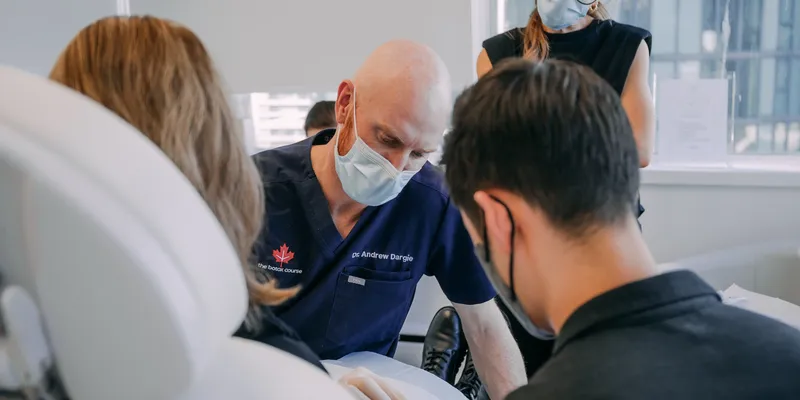
Dr. Andrew Dargie
Founder and Lead Educator
MD, FRCPC, Aesthetic Medicine Specialist
Dr. Andrew Dargie is a leading expert in medical aesthetics with over 15 years of experience. He has trained thousands of medical professionals worldwide and is recognized for his innovative injection techniques and commitment to patient safety.
Learning an injection technique and having authority to provide treatment are different parts of becoming an aesthetic nurse. Ontario's upcoming changes make that distinction especially important for nurses planning a clinic or reviewing how their existing practice obtains treatment orders.
The College of Nurses of Ontario (CNO) announced that updates to its Scope of Practice and Medication practice standards will take effect on March 1, 2027, following Council approval on September 24, 2026. As of October 9, 2026, the changes are approved but not yet in force.
Start with CNO's announcement and FAQ. CNO—not a course provider—sets the nursing expectations. This article helps organize the questions to discuss with your employer, authorized provider and professional advisers.
The three points to understand first
1. Affected aesthetic services need client-specific orders
From March 1, 2027, CNO expects nurses to use client-specific orders rather than directives for aesthetic services involving prescription drugs or controlled acts. The authorized provider assesses the individual client before issuing that order. CNO identifies the assessment expectation as a change across practice settings, not only aesthetics.
A directive is an order for a group of clients meeting defined criteria. A client-specific order concerns one individual. Changing a document's heading or adding a client's name is not a substitute for the assessment and clinical decision that support an individualized order.
2. The onsite requirement concerns nurse delegation
When a nurse delegates an aesthetic controlled act to someone without authority to perform it, the nurse must be onsite for the entire delegated procedure. This may involve an unregulated care provider or a regulated professional who does not have the required authority.
That is different from an RN/RPN performing a controlled act they have legislated authority to perform under a client-specific order. CNO says the authorizing provider does not need to be onsite in that situation unless the provider or nurse considers it necessary, such as during training. An order and delegation are different authorizing mechanisms.
3. Existing safety responsibilities do not wait until 2027
Competence, informed consent, documentation, protection of personal health information and preparation for adverse events already matter. The current requirements continue to apply during the transition period.
The March 2027 announcement is not a reason to delay reviewing an unclear order, an unsafe setting or a gap in training.
A practical preparation checklist
This is a starting point for discussion, not an exhaustive regulatory checklist or a guarantee that a practice meets every applicable requirement.
Review how your practice obtains orders
Identify which services currently rely on directives and which already use individual orders. Discuss the affected services with your authorized provider and plan how individual assessment and client-specific ordering will work before the effective date.
Ask who assesses the client, who issues the order, how the instructions are communicated and what the nurse should do when they are unclear or incomplete. Do not treat a training certificate or a medical-directorship membership as authority to treat an individual client.
Understand follow-up, changes and order duration
CNO does not say every appointment automatically needs a new order. A clear, complete and appropriate order can cover a defined course of care or treatment plan. The treating nurse still assesses the client and determines whether the order remains appropriate.
If health, medication use, treatment goals, treatment needs or another relevant factor changes, consult the authorized provider; reassessment and an updated order may be required. Once the specified order duration ends, the provider must reassess and issue a new order before treatment continues.
Discuss how your practice will recognize changes and approaching expiry. Do not assume one standard duration fits every client or procedure.
Check education and ongoing competence
CNO's current aesthetic-services guideline recognizes that entry-level nursing education does not fully cover the knowledge and skills needed for this area. It describes additional education that includes theory, supervised practical application and evaluation, followed by continuing development.
When evaluating education, ask about anatomy, pharmacology, assessment, consent, infection prevention, procedure risks, adverse-event management, supervised practice and evaluation. Consider whether the learning addresses your actual role, experience and client population.
CNO does not endorse or approve specific continuing-education programs or certifications. Avoid interpreting a course provider's certificate as CNO approval or as prescribing authority.
Review the clinical setting and care team
Consider the resources needed for safe care, including equipment, access to clinical consultation, emergency response and follow-up. If controlled acts are delegated, review the delegatee's authority and competence, the nurse's responsibilities and how onsite presence will be maintained for the full procedure.
Written protocols and an EMR can support documentation and communication. Neither replaces professional authority, competence or clinical judgment. Adopting a particular software product is not itself proof of regulatory compliance.
Review consent, privacy and documentation
Discuss how the client understands the proposed care, its risks, alternatives and follow-up. Review how assessments, orders, treatment, product details and consent are documented, and who is responsible for the records.
Treatment photographs and identifiable health information belong in appropriate secure clinical channels, not public course inquiries, social messages or AI search prompts. Review your privacy and recordkeeping arrangements with the appropriate adviser rather than assuming a platform name establishes compliance.
Does virtual assessment remain possible?
CNO's FAQ says an NP may assess a client in person or virtually when appropriate. The NP determines whether virtual assessment and remote prescribing are suitable based on clinical judgment, procedure risk and the client's condition.
This does not mean that every online form or photograph submission is an adequate assessment. Nor should an NP-specific FAQ be used to establish the requirements for a physician or another profession. Confirm the applicable requirements with the provider and their regulator.
Education and prescriber support: different roles
The botox course provides medical-aesthetics education. Dr. Dargie's service describes medical-directorship, mentorship and prescriber support. Nurses exploring either should distinguish education from individual treatment authorization and verify eligibility, assessment arrangements and availability.
Training does not guarantee an order, and provider review does not replace the nurse's own assessment and responsibilities. No course, membership or software subscription guarantees approval or a compliant practice.
Explore the botox course's Canadian education programs or ask about Dr. Dargie's Ontario medical-directorship support. Use inquiry forms for professional questions only; do not include patient information.
Keep the primary guidance close
CNO says it will communicate when the updated standards are available and update its aesthetic-services guideline. Revisit the primary guidance as implementation approaches; nurses with questions can contact CNO through its Practice Support Form.
This article is general education, not individual clinical, regulatory or legal advice. It does not imply CNO endorsement of the botox course, Dr. Dargie or an EMR.